.png?w=1600&h=900)
If you’ve spent any time researching custom printing or heat transfer, you’ve probably seen sublimation printing and heat press mentioned side by side.They often appear as if they’re two separate options — or even competing methods.That’s usually where confusion starts.
In reality, sublimation printing and heat press are not alternatives.They describe different parts of the same workflow.Understanding this difference early makes everything else much easier.
Why Sublimation Printing and Heat Press Are Often Confused
Most beginner confusion doesn’t come from the process itself — it comes from how these terms are used online.You’ll often see:
- Articles framed as “sublimation printing vs heat press”
- Equipment lists that suggest a choice between the two
- Content that mixes printers, inks, and presses into a single category
Part of the confusion also comes from the way sublimation is often grouped under the broader category of heat transfer.
Since sublimation is one type of heat transfer process, it’s frequently discussed alongside other methods that use similar equipment, even though the roles of method and tool are very different.When these concepts are presented on the same level, it’s natural to assume they compete with each other.
They don’t. They simply serve different roles.

Sublimation Printing Is a Method, Not a Complete Process
Sublimation printing refers to a specific printing method where special ink is designed to react under heat and permanently bond with a surface. On its own, sublimation printing does not create a finished product. The printed image is only a preparation step. At this stage, the design has not yet bonded with the material.
The key point here is simple: Sublimation printing defines how an image is prepared — not how it is completed.

A Heat Press Can Work Without Sublimation Printing
A heat press is a tool most creators are already familiar with. It provides controlled heat and pressure and can be used across many different transfer methods. In practice, a heat press does not depend on sublimation printing to function. It can be used with:
- DTF transfers
- Heat transfer vinyl
- Printed transfer papers
- Other heat-based applications
For example, when applying HTV designs to fabric, the same machine is often used as a heat transfer vinyl press.
This flexibility is why heat presses are often the starting point for custom work — they’re not tied to a single printing method. In the context of this discussion, what matters is this:
A heat press can exist and work perfectly well without sublimation printing.
Where the Overlap Actually Happens
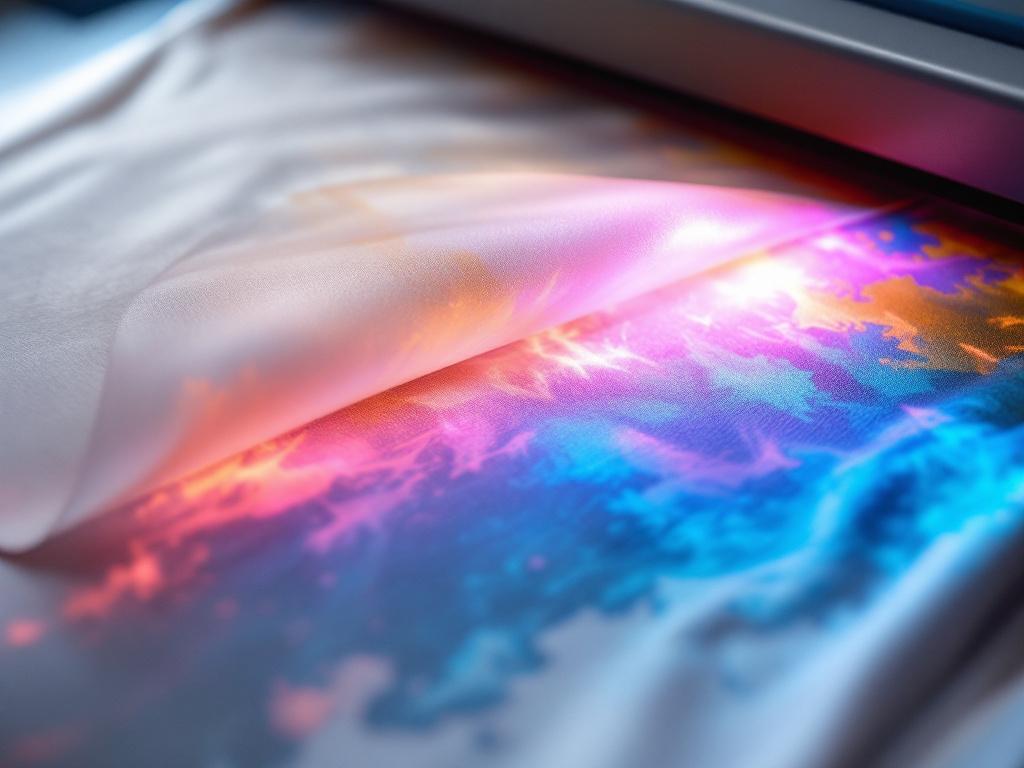
The overlap happens at the completion stage. Sublimation printing prepares an image that is meant to be activated by heat. A heat press provides the exact conditions needed for that activation. Once heat and pressure are applied:
- The sublimation ink reacts
- The image bonds with the surface
- The product becomes permanent
This is where the two connect. Not because they’re interchangeable — but because one prepares the image, and the other finishes the process.
So Is It “vs” or “with”?
The word “vs” is misleading. Sublimation printing and heat press don’t compete with each other. They don’t solve the same problem. A more accurate way to think about it is:
Sublimation printing = method
Heat press = tool
Once you see that distinction, the confusion disappears. You’re no longer choosing between two options — you’re understanding how one fits into the other.
Final Thoughts
If you already know what a heat press is, the real question isn’t whether you need one. The real question is how sublimation printing fits into what you can already do with it. Sublimation printing defines a specific way to create images. A heat press makes that method usable in real products.
When you stop asking “which one is better” and start asking “how they work together,” the relationship becomes clear.